LifeCare CEO Dean Alverson Joins Industry Leaders at the 2026 FUTURE Conference
The future of healthcare is increasingly connected to what happens beyond the walls of hospitals and other traditional care settings. As more care moves into the home, providers are navigating new expectations around clinical outcomes, payer relationships, technology, workforce challenges and sustainable growth.
Those questions brought leaders from across the home-based care industry to Austin, Texas, for the 2026 FUTURE Conference, held August 26–28 and co-presented by Home Health Care News and HME Business. The three-day conference brought together executives, operators, investors, payers and industry partners across home health, home care, hospice, palliative care and home medical equipment.
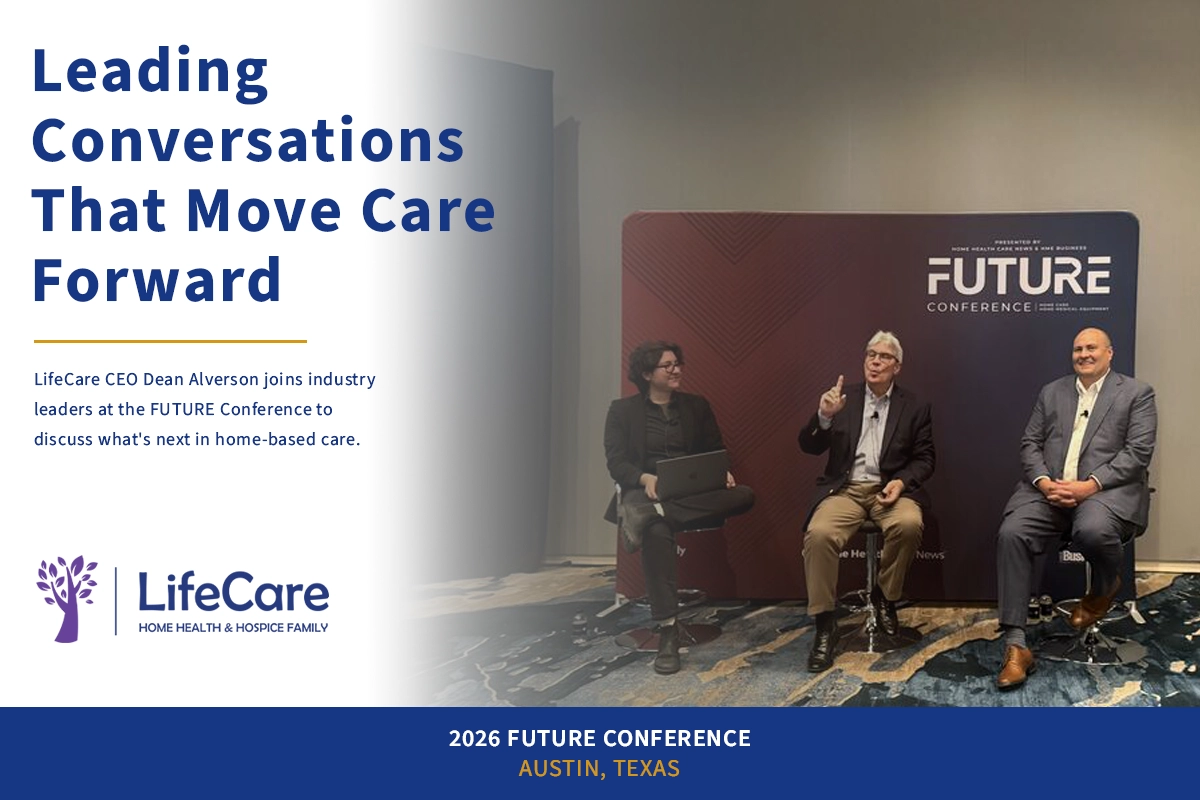
Among the industry leaders contributing to the conversation was Dean Alverson, CEO of LifeCare Home Health & Hospice Family, who participated in two sessions focused on some of the most consequential questions facing care-at-home providers today.
For LifeCare, participating in these conversations reflects a broader commitment: not simply responding to changes in home-based care, but helping advance thoughtful discussion about where the industry is headed and what it will take to continue delivering high-quality care in the communities providers serve.
Rethinking the Home-Based Care Referral Model
Alverson’s first session, “The New Referral Engine: Hospital Systems, Payviders and the Push Toward Integration,” examined how relationships between health systems, payers and home-based care providers are changing. He joined Casey McKeon, President of CenterWell Home Solutions, and Stacie Bratcher, CEO of LiveWell Partners, for a discussion about the evolution from traditional referral relationships toward deeper healthcare partnerships.
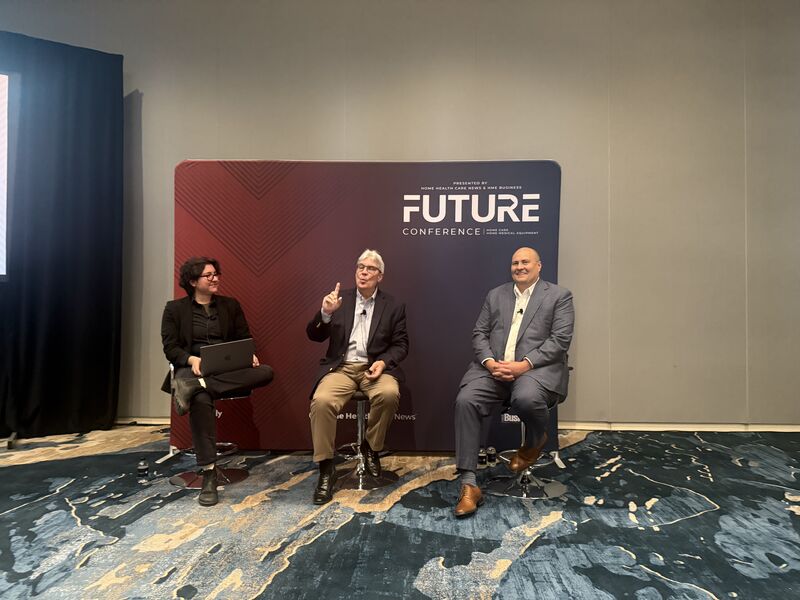
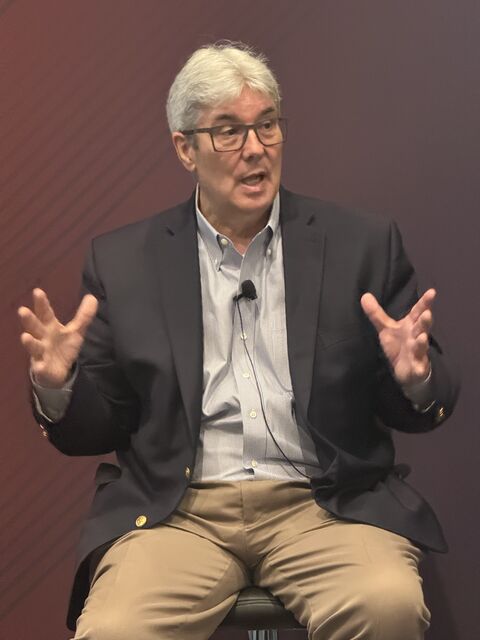
Photos courtesy of Home Health Care News.
Historically, a referral might have represented a relatively straightforward handoff from one healthcare setting to another. Today’s environment increasingly asks providers to think beyond the referral itself.
Health systems, payers and home-based care organizations are working more closely around patient outcomes, total cost of care and continuity across settings. As value-based arrangements continue to develop, home-based care providers face opportunities to become more integrated healthcare partners while maintaining the operational strength and independence necessary to serve their communities effectively.
For organizations providing home health, personal care, hospice and other services in the home, that shift has significant implications. A strong partnership can no longer be built solely around receiving referrals. Increasingly, providers must be able to demonstrate clinical value, communicate effectively across the care continuum, support patients through transitions and build trust with the organizations responsible for their care.
Why Integration Matters as More Care Moves Home
The larger conversation taking place at FUTURE reflects a transformation already underway across healthcare: the home is becoming an increasingly important setting for care.
That doesn’t mean every healthcare service belongs there. It means patients, families, health systems and payers are increasingly recognizing the role that appropriate home-based services can play across different stages of a person’s healthcare journey.
For someone recovering after hospitalization, skilled home health services may help support the transition home through nursing, therapy and other medically necessary care. For an older adult who wants to remain independent but could benefit from assistance with everyday activities, personal care and other supportive services may make remaining at home more achievable. For individuals living with serious or life-limiting illness, palliative and hospice care can bring specialized support, symptom management and comfort to patients and their families.
These services are different, but they share an important connection: meeting people where they are. As healthcare becomes more interconnected, the organizations providing these services must become more connected as well.
Building Partnerships Without Losing What Makes Local Care Work
One particularly important element of the referral discussion was the challenge of strengthening relationships with larger healthcare organizations while maintaining operational independence and financial sustainability. It’s a challenge with implications across the home-based care industry.
Scale can create opportunities for investment, shared expertise, technology and stronger infrastructure. At the same time, healthcare remains deeply personal and deeply local. Patients don’t experience healthcare as an organizational chart. They experience the nurse who walks through their front door, the therapist helping them regain confidence after surgery, the caregiver who knows how they take their morning coffee, or the hospice professional who sits with a family during one of the most difficult periods of their lives.
The future of home-based care, therefore, isn’t simply about becoming larger or more integrated. It’s about finding ways to build stronger systems without losing the human relationships at the center of care.
That principle is especially relevant to LifeCare Home Health & Hospice Family, where a family of healthcare organizations serves communities across multiple states while maintaining the local identities, relationships and expertise that have been built within those communities.
Looking Ahead: What Should At-Home Care Operators Do Next?
Following the referral discussion, Alverson joined Jamie Davis, owner of Cornerstone Medical Supply, and Aaron Marcum, co-founder of Riverside Home Care, for the conference’s final session: “Closing Town Hall: The FUTURE of At-Home Care and HME.”
Rather than focusing on one narrow topic, the audience-driven conversation challenged the panel to look across the conference and distinguish between short-term noise and the developments that operators should genuinely be preparing for. Underlying the discussion was a refreshingly practical question: What should providers actually do next?
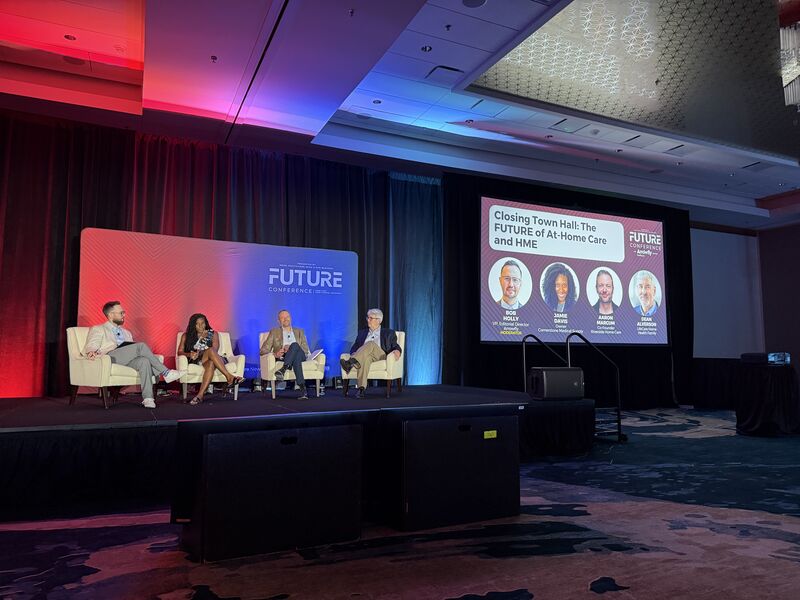
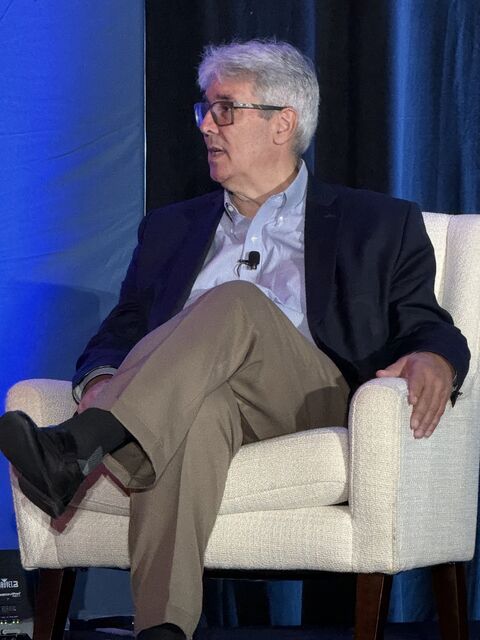
Photos courtesy of Home Health Care News.
That question matters in an industry facing significant change. Home-based care organizations are navigating reimbursement pressures, workforce shortages, Medicare Advantage dynamics, rapid developments in artificial intelligence and other technologies, regulatory requirements, consolidation and changing expectations from healthcare partners.
There is no single strategy that addresses all of these challenges. What remains consistent, however, is the importance of strong operations, responsible growth, clinical quality, compliance and an ability to demonstrate value.
Following the conference, Davis reflected on the importance of medical necessity, strong documentation and treating compliance as an integral part of operations rather than an administrative afterthought. His perspective underscores a larger lesson for the industry: innovation and disciplined execution aren’t opposing ideas. The organizations best positioned for the future will need both.
Preparing for the Future Without Losing Sight of the Present
Conferences are naturally focused on what’s next: new technologies, new reimbursement models, new partnerships and new approaches to growth. But for home-based care organizations, preparing for the future also requires remaining grounded in something that hasn’t changed: the responsibility to provide excellent care today.
Technology can help clinicians work more effectively. Stronger partnerships can improve transitions between healthcare settings. Greater scale can provide resources and infrastructure. Data can help organizations understand outcomes and identify opportunities for improvement. None of those things, however, replaces the relationship between a patient, a family and the people caring for them.
The opportunity is to use innovation, integration and growth to strengthen that relationship rather than distance ourselves from it.
That’s ultimately what makes conversations such as those held at FUTURE valuable. They create an opportunity for leaders from different parts of healthcare to challenge assumptions, exchange ideas and consider how the decisions organizations make today will affect patients and families tomorrow.
Helping Shape What’s Next in Care at Home
LifeCare Home Health & Hospice Family is proud to have Dean Alverson represent our organization alongside leaders from across the home-based care community at the 2026 FUTURE Conference.
His participation in discussions about healthcare partnerships, referral models, sustainable growth and the future of at-home care reflects the kind of leadership we believe this moment requires: experienced enough to understand the complexities of today’s healthcare environment and forward-looking enough to prepare for what’s coming next.
Across the LifeCare family of companies, our teams see the importance of home-based care every day. We see it when a patient returns home after hospitalization, when an older adult receives the support needed to remain independent, when clinicians, caregivers and families work together toward a common goal, and when compassionate hospice care helps patients and families focus on comfort, dignity and quality of life.
The healthcare landscape will continue to change. Payment models will evolve, technology will advance, and partnerships will become more sophisticated. But the opportunity at the center of those changes remains remarkably simple:
How can we make care better for the people who depend on us?
That’s a conversation worth being part of.
About the Author

Renan Augusto
Marketing Manager, LifeCare Home Health & Hospice Family
Blending digital innovation, compassion, and strategy to elevate home health, in-home care, and hospice across the LifeCare Home Health & Hospice Family.
Renan Augusto is a digital marketing strategist with a Master of Science in Digital Marketing, Meta Digital Marketing Certification, and specialized training in AI-powered marketing through Semrush. He brings a strategic, people-first approach to the LifeCare Home Health & Hospice Family, helping families across the country to find trusted, compassionate in-home care through clear and meaningful communication.
With extensive experience in the senior care space, Renan has helped hundreds of families begin home care services. As a Certified Dementia Practitioner, he brings empathy and clarity to every project, ensuring that education and outreach remain accessible, respectful, and centered on real people.
Renan previously served as Marketing Chair for GROWS and continues to serve as an Advisor. GROWS is a nonprofit organization focused on strengthening the senior care community through advocacy, education, and collaboration. His work centers on connection, authenticity, and digital strategies that make a meaningful difference in people’s lives.